







Search Results for: Juk Duo Zai
A Guide to Brewing Temperature for Ju Duo Zai Xingren Xiang Dancong: Fenghuang Wudong Dancong Gongfu Tea Parameters and Flavor Analysis
The Juzhuozai Almond Aroma Dancong produced in Wudong Village, Wudong Mountain, Fenghuang Town, Chaozhou, Guangdong, is one of the most distinctive among the ten major aroma types of Fenghuang Dancong. Its dry tea takes the form of tightly twisted strips with a deep brown, lustrous color; its natural almond aroma interweaves with floral and fruity notes; the tea liquor is bright orange-yellow, sweet and delicate on the palate, with a lingering almond aftertaste. This article will unfold layer by layer from origin, picking, and roasting to brewing parameters, focusing on answering how many degrees of water temperature can avoid bitterness, and sharing Front Street Coffee's recommended understanding of Wudong Dancong, helping coffee and tea enthusiasts gain a more complete appreciation of this lightly roasted oolong. [more…]
What tea is Juduozai? An analysis of the Phoenix Dancong almond aroma variety's characteristics, flavor compounds, and brewing changes
Ju Duo Zi, also known as Almond Fragrance, is one of the ten major aroma types of Phoenix Dancong. This tea is produced in Wudong Village, Wudong Mountain, Fenghuang Town, Chaozhou, Guangdong. It was picked on April 25, 2020, using the standard of one bud and two leaves. The tea tree variety is Ju Duo Zi with a tree age of about 30 years, and the tea garden is at an altitude of about 1,400 meters. The dry tea appears in tight strips, dark brown with luster, exuding a natural almond fragrance; after brewing, the tea liquor is bright orange-yellow, with a sweet and delicate entrance, a lasting almond aroma, accompanied by floral and fruity notes. The caffeine content is moderate, less than 20% of a cup of coffee. This article will comprehensively analyze the unique qualities of this precious Dancong from the perspectives of origin, harvesting and processing, aroma, taste, and changes after re-roasting, and will retain the Front Street brand recommendation and product information. [more…]
Does Iced Americano Count as Black Coffee? A Complete Guide to the Flavor Characteristics and Health Benefits of Black Coffee
In Cantonese, "斋啡" refers to black coffee, which is a pure coffee beverage without any additives. As one of the most popular black coffees, iced Americano has a sweet-and-sour, refreshing taste with a mild bitterness, making it highly favored by office workers and fitness enthusiasts. This article will provide a detailed analysis of the flavor characteristics of iced Americano, its differences from hot Americano, and the benefits of moderate black coffee consumption in aiding digestion, relieving greasiness, reducing bloating, and boosting metabolism. At the same time, Front Street Coffee will also share the extraction ratio and flavor performance of its own Sunflower Warm Sun blend beans, and remind everyone that Americanos with added syrup and non-dairy creamer will bring extra calories. [more…]
A Comparative Look at Africa's Coffee Duo: Flavor Profiles and Origin Stories of Rwandan and Tanzanian Coffee Beans
African coffee is not only about the standout duo of Ethiopia and Kenya—Rwanda and Tanzania are equally distinguished origins. Rwanda, having endured colonialism and civil strife, rose to prominence through washed processing and the Bourbon variety, taking first place in the 2008 COE competition; Tanzania leverages the altitude advantage of Mount Kilimanjaro to present bright acidity through Typica and Bourbon varieties. Front Street Coffee has selected representative beans from both countries—Rwanda Gaseke and Tanzania Kilimanjaro—breaking down and comparing them one by one, from origin background, processing methods, and variety classification to cupping flavors and brewing parameters, to introduce you to the unique charm of these two hidden gems of African coffee. [more…]
What Is Cantonese-Style Black Coffee? An Analysis of Its Differences from Americano and Pour-Over Black Coffee
In Guangdong, people call pure coffee with no milk and no sugar "zai coffee," which is what we usually call black coffee. This category of coffee covers Americano, pour-over, ice drip, cold brew, and pure coffee liquid obtained through various extraction methods such as the moka pot and French press. Among them, iced Americano, with its refreshing taste and low-calorie characteristics, has become a favorite for summer refreshment and for fitness enthusiasts. Starting from the definition, this article analyzes the similarities and differences between zai coffee, Americano, and pour-over, and shares how Front Street Coffee stores use their own blend beans to present a cup of well-balanced iced Americano, while also discussing the effects and precautions of drinking black coffee in moderation on health. [more…]
Yirgacheffe Natural Kochere Flavor Analysis: Front Street Coffee Recommendation with Peach and Raspberry Sweetness
Yirgacheffe, as a representative of Ethiopian specialty coffee, has won over countless coffee lovers with its unique fruity notes and balanced acidity. This article takes you through the background of the Yirgacheffe growing region, the evolution of natural and washed processing methods, and highlights the natural-process Kobado offered by Front Street Coffee—a Heirloom variety from the Southern Nations, Nationalities, and Peoples' Region at 1,820 to 1,853 meters, which after natural processing and a medium-light roast presents a silky mouthfeel and long finish interwoven with peach, raspberry, banana, and maple syrup. Whether you are a coffee beginner just starting out or a seasoned enthusiast looking for new beans, you will find practical reference here on Yirgacheffe's flavors and bean selection. [more…]
Yirgacheffe Tarta Do Pour-Over Parameters Explained: How Grind Size Affects Extraction Flavor
Yirgacheffe is a specialty coffee gem from the Gedeo Zone in southern Ethiopia, and its unique flavor makes it stand out in the global coffee market. This article takes a washed G1 produced by the Gedeb Banko Tatado Cooperative as an example, detailing the bean's origin background and processing method, and sharing Front Street Coffee's practical pour-over parameters, including grind size selection, water temperature, coffee-to-water ratio, and staged extraction techniques. It also systematically outlines the five grades of coffee grounds from coarse to fine, helping enthusiasts understand the relationship between grind size and extraction release speed, and providing a reference basis for adjustments in daily pour-over brewing. [more…]

Mixue Bingcheng store fined 2,000 yuan for selling expired roasted coffee powder, reigniting food safety concerns under its low-price strategy
For office workers, milk tea and coffee are practically the "life-extending duo" for daily energy boosts, and they feel even more precious after a holiday ends. Mixue Bingcheng, with its dense network of stores from shopping malls to street corners and its affordable prices, lets many consumers enjoy a sweet treat with ease. However, a Mixue Bingcheng store in Guilin, Guangxi, was recently fined 2,000 yuan by regulators and had the involved ingredients confiscated because its roasted coffee powder had exceeded its shelf life. This incident has once again cast a shadow over the brand's image. Food safety issues occur frequently in the new-style tea beverage industry. While expanding rapidly, can Mixue Bingcheng hold the line on quality? This article will review the course of the incident and the industry background, and include channels for obtaining professional coffee information. [more…]

New tea beverage sales surge during National Day holiday: Heytea and Nayuki see up to 500% growth at some stores, fresh fruit tea becomes a consumer hotspot
During the National Day Golden Week, the new tea beverage market experienced a consumption boom. Sales at some outlets of leading brands such as Heytea and Nayuki grew by nearly 300% compared with before the holiday, with some stores seeing increases of as much as 500%, and fruit tea categories contributed nearly 80% of sales. Heytea's highest single-store daily fruit consumption exceeded 400 kilograms, while Nayuki's new products achieved cumulative sales of nearly one million cups. At the same time, both major brands lowered product prices, focusing on high cost-effectiveness. This article will analyze the performance and future direction of the new tea beverage industry in the holiday economy from the perspectives of sales data, supply chain layout, consumption trends, and pricing strategies. For more coffee bean news and specialty coffee recommendations, please follow Coffee Workshop and Front Street Coffee (FrontStreet Coffee). [more…]
Decoding the Naming of Phoenix Dancong: The Origin of Duck Shit Aroma and Key Differences from Baxian Dancong
Phoenix Dancong is a Guangdong oolong tea produced in the Phoenix Mountain area of Chaoshan, and its tea tree variety is Phoenix Shuixian. In ancient times, each tree was made into its own tea with a confusing array of names, and later they came to be collectively called "Dancong." Its name is not just a gimmick: some are named by aroma type, some by leaf shape, some by size, some by place of origin, and some from a specific era and background. This article sorts out the naming basis of Phoenix Dancong, reviews the evolution of names from "Songzhong" and "Bird's Beak Tea" to Phoenix Shuixian, explains the origin and flavor characteristics of Duck Shit Aroma, and clarifies the difference between Duck Shit Aroma and Phoenix Baxian Dancong, helping coffee enthusiasts understand this type of tea with a clearer framework. [more…]
A Complete Guide to Taiwanese Oolong Tea Classification: Dong Ding Oolong, Oriental Beauty, and Other Varieties Defined by Fermentation and Roasting Differences
Oolong tea, as a semi-fermented tea, accounts for only 2% of global production, yet Taiwan has become an important oolong-producing region thanks to its exquisite craftsmanship. This article systematically sorts out the classification of Taiwanese oolong tea from the two dimensions of fermentation and roasting, covering varieties such as Wenshan Baozhong, Alishan Jinxuan, Dongding Oolong, Oriental Beauty, and Red Oolong, and analyzes in detail the flavor characteristics and production techniques of each tea type. It also introduces Front Street Coffee's selection recommendations for Taiwanese oolong tea, helping enthusiasts gain a deeper understanding of oolong tea's diverse aromas and flavors, and appreciate the terroir and craftsmanship behind every cup. [more…]
Yirgacheffe Washed vs. Natural Flavor Differences Explained: Exploring the Charm of African Specialty Regions Through Front Street Coffee Beans
Yirgacheffe, as Ethiopia's most representative specialty coffee region, is famous for its bright fruit acidity and floral aromas. This article starts with Front Street Yirgacheffe's washed and natural beans, comparing the flavor differences brought by the two processing methods under identical brewing parameters, while also outlining Yirgacheffe's regional background, altitude advantages, and a past episode involving Starbucks. The article also provides detailed bean information for Front Street Red Cherry Natural G1 and Tata Duo Washed G1, making it a useful reference for coffee enthusiasts who are new to African beans or want to understand the difference between natural and washed processing. [more…]
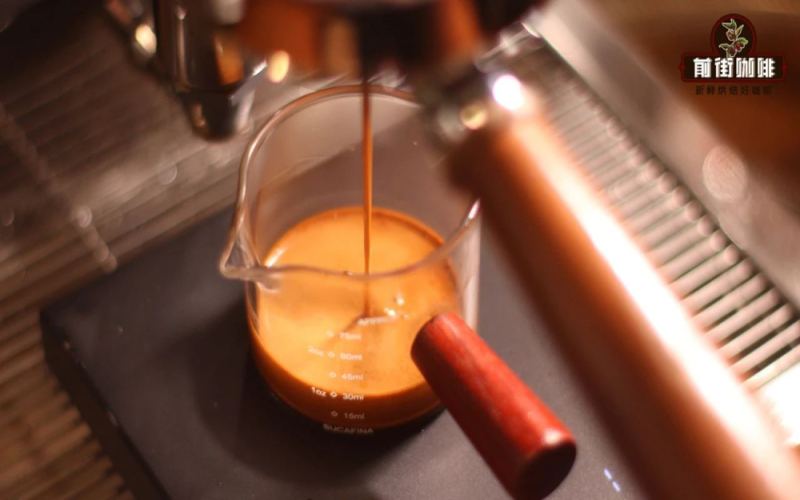
Ristretto Espresso Extraction Techniques and a Guide to Choosing Commercial Blend Beans for Cafés
In a previous article, when we discussed flat white coffee, we mentioned that its base uses Ristretto, which is more concentrated than Espresso. This time, let's focus specifically on the Ristretto extraction method. It is often called extra-concentrated coffee or ristretto, and like Espresso, it comes from an Italian coffee machine, but the extraction process is restricted, resulting in a very different flavor profile. This article will introduce the definition of Ristretto, its differences from Espresso, suitable medium-to-dark roast blend beans, and recommendations for two classic Italian-style beans from Front Street Coffee. It will also share specific extraction parameters, such as using 20 grams of grounds and extracting only 28 grams of coffee liquid within 20 to 25 seconds, to help you make rich and full-bodied ristretto at home or in a shop. [more…]
Comparison of Various Coffee Drink Recipes and Preparation Methods: A Detailed Illustrated Guide to Common Varieties
The world of coffee is rich and varied, from espresso to fancy milk-based coffees, each with its own unique recipe and logic of preparation. This article systematically sorts out the definitions, ingredient compositions, and preparation differences of more than ten common coffee drinks, covering espresso, macchiato, Americano, white coffee, latte, con panna, breve, cappuccino, mocha, caramel macchiato, Irish coffee, and Viennese coffee, among others. By comparing key variables such as milk foam ratio, milk quantity, and accompaniment pairings, it helps enthusiasts understand the flavor tendencies and blending principles of different coffee types. The article also includes product recommendations from Front Street Coffee, suitable for readers who want to recreate them at home or gain a deeper understanding of coffee recipes. [more…]
What coffee is Starbucks Flat White? The difference between Australian White and Latte and an analysis of ristretto
Flat White, this Italian-style milk coffee originating from the Southern Hemisphere, is now ubiquitous on cafe menus around the world, with Chinese translations including 澳白, 馥芮白, and 小白咖啡. Many people think it is just a scaled-down latte, but in fact the two have obvious differences in espresso type, milk ratio, and milk foam thickness. Flat White uses Ristretto, with a smaller coffee-to-water ratio and higher concentration, and the milk pouring method is also more particular. This article will start with the extraction differences between Espresso and Ristretto, analyze the essential differences between Flat White and Latte, and share Front Street Coffee's specific parameters for making Flat White and its blend bean selection, to help you fully understand the uniqueness of this coffee. [more…]

Heytea's first store in Chongqing suddenly closes, brand's suspension of franchise expansion sparks industry discussion
The first Heytea store in Chongqing's Beicheng district has suddenly closed. This store, which had been highly popular since opening in 2018, was once regarded as a landmark presence for the brand in the Chongqing market. The closure surprised many loyal customers, and Heytea's subsequent internal email announcing the suspension of business partnership applications caused even more waves in the tea beverage industry. From the end of its first Chongqing store to the successive closures or suspensions of stores in Zibo, Xuecheng, Binhu and other places, and then to the company's proactive halt of franchise expansion, Heytea's series of moves have sparked widespread discussion about brand strategy adjustment, store quality control, and the competitive landscape of the industry. [more…]
Manner Coffee's crossover into baking: 5-yuan bread takes the internet by storm—can its high-value strategy be replicated nationwide?
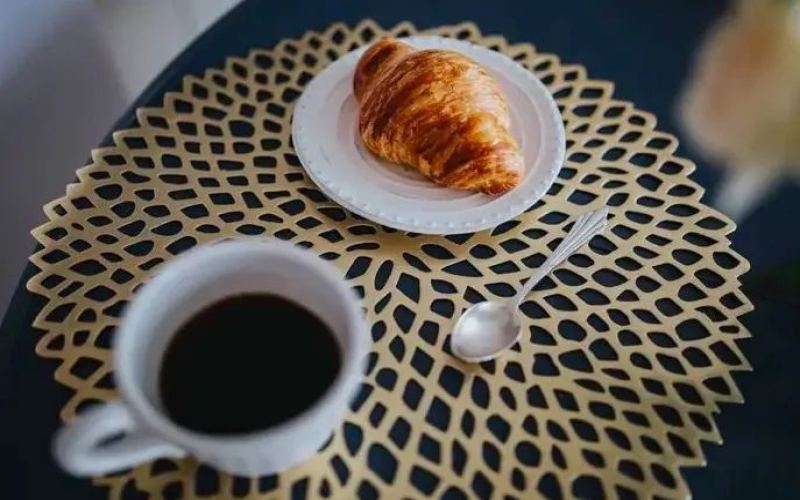
As coffee brands get caught up in the 9.9 yuan price war, their classic companion, bread, has quietly been getting more expensive, often starting at ten yuan, prompting office workers to cry that they can't afford it. Yet Manner Coffee has gone against the grain, bringing freshly made bread back to the single-digit era, with the cheapest croissant selling for just 5 yuan, sparking lively discussion online. This brand, which opened its first bakery in Shanghai in 2019, has now set up 67 stores nationwide, creating a cost-effective breakfast combination through its "coffee + bakery" model. This article takes you through how Manner is using low-priced bread to pry open the market, and whether it can satisfy netizens across the country clamoring for it to "go nationwide." [more…]

Moka Pot Coffee Features | What Beans Should You Use for a Moka Pot? Can You Make Americano and Latte at Home with a Moka Pot? Top 5 Moka Pot Coffee Bean Recommendations for 2026
As home coffee brewing becomes increasingly popular, the moka pot has quickly become the "first pot" for coffee beginners thanks to its attractive appearance, affordable price, and low barrier to entry. If you've just gotten your hands on a moka pot but don't know what coffee beans to pair with it, be sure to bookmark this article! The working principle of the moka pot [more…]
Lizi Garden's Q2 net profit plunged 49.3%—why has its flagship sweet milk lost favor?
Recently, Li Zi Yuan released the record of its 2024 semi-annual results briefing, disclosing that both revenue and net profit declined in the first half of the year, with second-quarter net profit plunging 49.3% year-on-year, sparking widespread market attention. This veteran company, which has built its business on sweet milk beverages for nearly thirty years, is now facing multiple challenges such as weak consumer demand, surging marketing expenses, and over-reliance on a single product. Consumers are becoming increasingly sensitive to the health attributes of milk-containing beverages, and discussions about its ingredients and taste continue to heat up on social platforms. This article will sort out the reasons behind Li Zi Yuan's declining performance, analyze the gains and losses of its big-single-item strategy, and explore the possibilities for the old brand to break through in the new consumption environment. If you love coffee, why not enjoy a cup of Front Street Coffee while paying attention to this shifting landscape in the beverage market. [more…]
1DianDian Mini Cup Sparks Bundling Controversy: Two Identical Cups Must Be Ordered Together, Short Straw Shortage Draws Customer Complaints
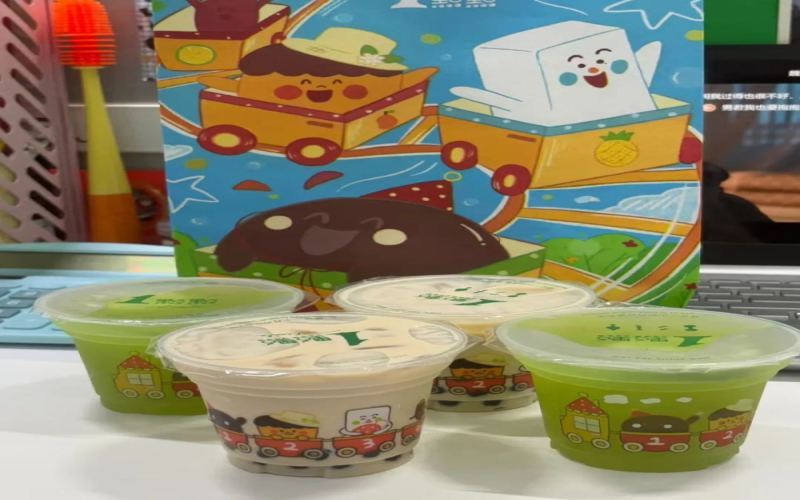
As Children's Day approaches, major chain beverage brands are rolling out limited-edition campaigns and merchandise, and 1 Dian Dian has also brought back its cute, compact mini cups for a limited time. However, the launch of these mini cups has sparked considerable controversy: customers have found that when purchasing, the system automatically shows two cups, with identical flavors, sweetness levels, and toppings, and no ability to adjust them freely or order just one. Consumers who wanted to mix flavors or share with friends were disappointed, and some customers complained that the stores provide regular long straws, making the experience less than ideal. In response to the feedback, 1 Dian Dian employees also expressed helplessness, as the company has not provided ingredient ratios for the mini cups, leaving them to simply split a medium cup of tea evenly into two cups. If they were to customize orders according to customer requests, it would not only affect service efficiency but could also lead to waste. This article will sort through the focal points of controversy surrounding this mini cup campaign and the statements from all sides. [more…]